Surgery Tips
Rhinoplasty Surgeon in Egypt
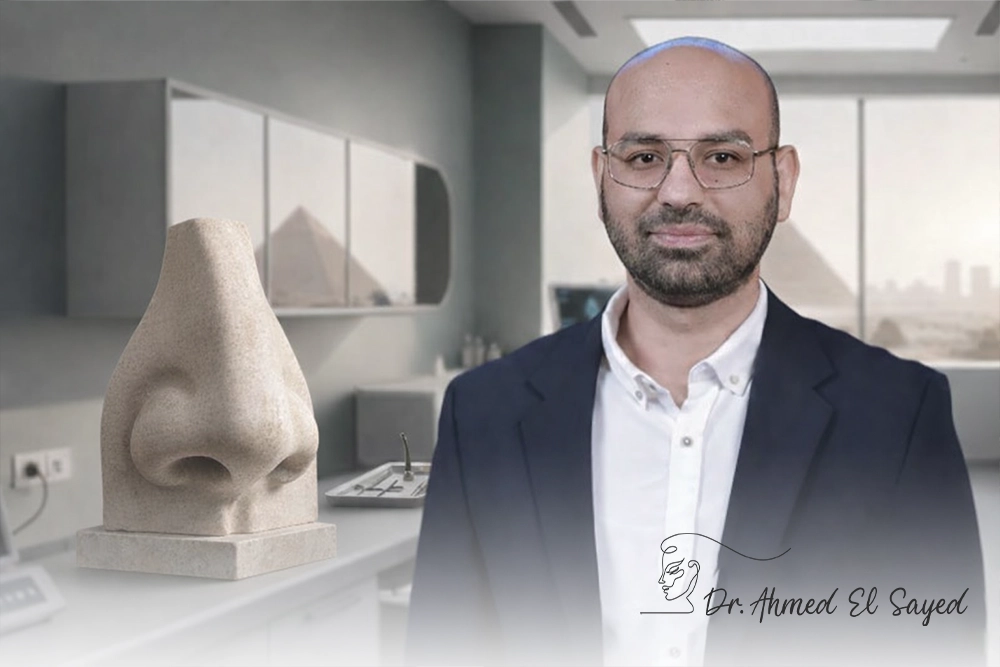
Rhinoplasty Surgeon in Egypt
Guide to Rhinoplasty in Egypt
When searching for a qualified rhinoplasty surgeon in Egypt, having a comprehensive guide that explains the procedure, available techniques, expected outcomes, and surgeon selection criteria is essential.Rhinoplasty is not only a cosmetic procedure designed to improve the appearance of the nose; in some cases, it can also serve a vital functional purpose by improving nasal breathing and resolving structural airway obstructions
Dr. Ahmed El Sayed is one of the prominent names in rhinoplasty, with more than 10 years of experience in precision plastic surgery. He is considered one of the best rhinoplasty doctors in Egypt, thanks to his natural and well-proportioned outcomes that take both facial harmony and nasal function into consideration.
This article serves as a complete guide to rhinoplasty in Egypt, explaining everything you need to know about the procedure, its different types, and why choosing a specialized surgeon is a crucial factor in achieving successful results.
For consultation and booking
What Is Rhinoplasty?
Rhinoplasty is a surgical procedure designed to modify the shape, size, or proportions of the nose to achieve facial harmony, often addressing internal airway function concurrently. The procedure can address several aesthetic and functional concerns:• Reducing overall nasal size (reduction rhinoplasty).
• Correcting a deviated septum (septoplasty).
• Smoothing a prominent dorsal hump.
• Refining, lifting, or reshaping the nasal tip.
• Correcting deformities caused by trauma or previous surgeries.
• The surgeon's anatomical mastery and aesthetic judgment.
The reasons for undergoing rhinoplasty differ from one patient to another. Some patients seek cosmetic improvement only, while others require surgery to improve breathing or correct congenital abnormalities.
The success of rhinoplasty depends mainly on:
• Accurate diagnosis.
• Proper surgical planning.
• The surgeon’s experience and skill.
Types of Rhinoplasty in Egypt
Rhinoplasty procedures vary depending on the goal of surgery and the surgical approach used. The main types of rhinoplasty in Egypt include:• Surgical (Traditional) Rhinoplasty: The most common type, performed under general anesthesia to achieve permanent structural modifications to the nasal bone and cartilage framework. It can be performed using one of two approaches:
o Open Rhinoplasty: Performed via a small incision across the tissue between the nostrils, providing direct visualization for complex restructuring or grafting.
o Closed Rhinoplasty: Performed entirely through internal endonasal incisions with no external scars, suitable for mild to moderate structural adjustments.
• Functional Rhinoplasty: Focuses on treating breathing problems by correcting conditions such as a deviated septum or turbinate hypertrophy. It can be performed alone or combined with cosmetic reshaping (septorhinoplasty).
• Non-Surgical Rhinoplasty (Liquid Nose Job): Involves strategic placement of hyaluronic acid dermal fillers to camouflage minor dorsal irregularities or lift the nasal tip. This is a temporary aesthetic adjustment and does not replace surgery in cases requiring significant structural correction.
• Revision Rhinoplasty: A complex secondary procedure performed to correct unsatisfactory aesthetic or functional outcomes from a prior surgery.
Benefits of Rhinoplasty in Egypt
Rhinoplasty in Egypt has become one of the most commonly requested cosmetic procedures, not only among local patients but also among patients traveling from abroad. This is due to several important factors, including:• Surgical Expertise: Egypt is home to many experienced consultant plastic surgeons who specialize in rhinoplasty, including Dr. Ahmed El Sayed. This level of expertise contributes to precise results and high standards of safety.
• Advanced Surgical Techniques: Specialized centers use modern surgical planning and precision techniques to achieve natural-looking results while preserving or improving nasal function.
• Balanced, Natural Results: The goal of rhinoplasty is to create harmony between the nose and the rest of the facial features. Dr. Ahmed El Sayed carefully evaluates overall facial proportions before surgery to achieve a balanced result.
• Cost Efficiency: The cost of rhinoplasty in Egypt is generally more affordable compared with many other countries while maintaining a high standard of medical care and surgical expertise.
• Dual Functional & Cosmetic Benefit: Patients can correct chronic breathing problems and aesthetic concerns within a single operative session.
Best Rhinoplasty Doctor in Egypt
Selecting an experienced rhinoplasty surgeon requires evaluating clear clinical criteria:• Years of experience in precision nasal surgery.
• The number of successful cosmetic and functional rhinoplasties.
• The ability to achieve natural, non-exaggerated results that preserve patient ethnic identity and facial balance.
• Consistently positive patient outcomes and testimonials.
• A clear and detailed treatment plan before surgery.
Dr. Ahmed El Sayed is one of the prominent names in this field, with more than 10 years of experience in plastic surgery. His comprehensive understanding of nasal anatomy enables him to achieve balanced contours that protect respiratory airflow.
During the consultation, Dr. Ahmed El Sayed conducts a thorough anatomical assessment and clearly explains realistic expectations to align surgical goals with the final outcome.
Pre-Operative Preparation for Rhinoplasty
Proper preparation is an essential step in improving the safety of rhinoplasty and reducing the risk of complications. Preparation usually includes:• Comprehensive Medical Evaluation: The surgeon evaluates the patient’s general health, nasal appearance, and breathing function. Routine preoperative laboratory workups may also be requested.
• Discussing Expectations: The expected postoperative appearance is discussed in detail, and in some cases digital imaging or simulation may be used to help the patient understand realistic outcomes.
• Medication Adjustments: Discontinuing blood-thinning medications, NSAIDs, and certain herbal supplements as directed to minimize bleeding risks.
• Smoking Cessation: Ceasing all tobacco and nicotine products several weeks prior to surgery, as nicotine impairs microvascular circulation and delays wound healing.
• Pre-Surgical Instructions: Following preoperative fasting guidelines strictly prior to general anesthesia.
Following these instructions carefully can help minimize risks and support the best possible result after rhinoplasty.
Steps of Rhinoplasty Surgery with Dr. Ahmed El Sayed
Rhinoplasty is performed through carefully planned steps to achieve both aesthetic and functional improvement. Dr. Ahmed El Sayed follows a clear medical protocol that includes:1. Evaluation and Surgical Planning: The process begins with a detailed assessment of the nose and overall facial features. The required changes are carefully identified, whether they involve removing a hump, reducing the size of the nose, reshaping the nasal tip, or correcting a deviated septum.
2. Anesthesia: The procedure is usually performed under general anesthesia to ensure patient comfort throughout surgery.
3. Surgical Correction: Using an open or closed approach depending on case complexity, the surgeon:
o Reshapes and refines nasal bone and cartilage.
o Removes the dorsal hump when present.
o Reshapes or refines the nasal tip.
o Corrects internal septal deviations to optimize the nasal airway
4. Closing the Incisions and Supporting the Nose: After completing the required changes, the incisions are closed, and an external nasal splint is applied to help support the new shape during the early recovery period.
The success of rhinoplasty depends greatly on surgical precision and the experience of the surgeon, which are key elements in Dr. Ahmed El Sayed’s approach to precision nasal surgery.
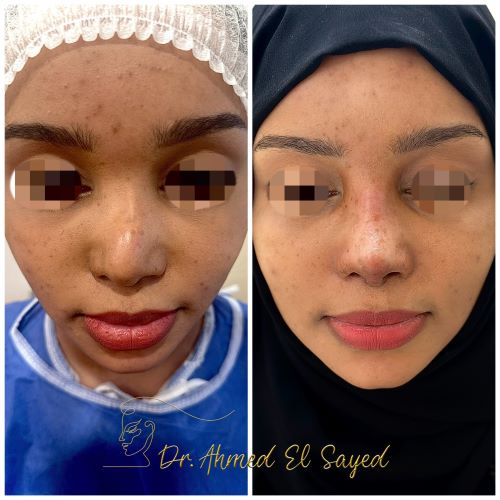
Rhinoplasty Results with Dr. Ahmed El Sayed
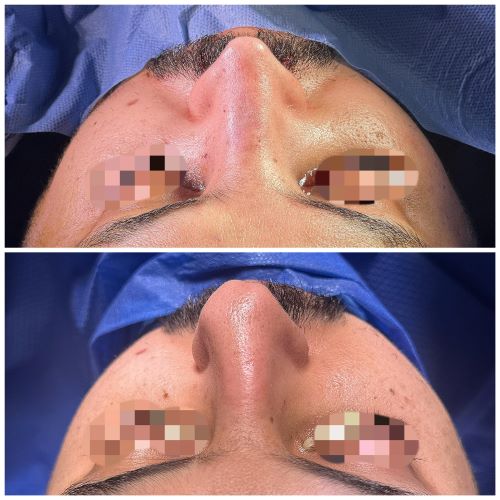
Initial results become visible immediately after the external splint is removed within the first week. However, the final shape of the nose continues to develop gradually over several months as swelling completely subsides. The main expected results of rhinoplasty include:• Enhanced facial symmetry and proportional harmony.
• Correction of structural irregularities, including dorsal humps and broad nasal tips.
• Marked improvement in functional nasal breathing where airway correction was indicated.
• A natural, refined appearance that blends with natural facial features.
Dr. Ahmed El-Sayed emphasizes structural preservation, ensuring the nose looks naturally balanced rather than artificially altered.
Recovery After Rhinoplasty
Recovery time varies from one patient to another, but it commonly follows these stages:• Week 1:
o Wearing an external nasal splint is usually required.
o Mild swelling and bruising may occur around the eyes.
o The external splint is removed between days 5 and 7.
• Weeks 2 to 4:
o Visible bruising resolves, and superficial swelling diminishes markedly.
o Patients can typically return to office work and routine daily activities within 7 to 10 days.
• Months 2 to 12:
o The appearance of the nose continues to improve gradually.
o Internal swelling may take approximately 6 to 12 months to completely resolve.
Key Post-Operative Instructions
• Avoid direct pressure or impact to the nasal area.• Avoid wearing eyeglasses or sunglasses for the duration prescribed.
• Avoid strenuous exercise during the first few weeks.
• Follow all medical instructions and attend scheduled follow-up appointments.
Following these instructions carefully can help maintain the result and reduce the risk of complications.
Conclusion
Choosing a qualified rhinoplasty surgeon in Egypt is the cornerstone of achieving safe, natural, and lasting results. Rhinoplasty demands advanced technical skill, deep anatomical knowledge, and a refined sense of facial balance. With more than a decade of specialized surgical experience, Dr. Ahmed El Sayed provides the clinical precision and aesthetic judgment needed to enhance appearance while fully preserving respiratory function.
Rhinoplasty usually takes approximately 1.5 to 3 hours, depending on the extent of correction required and whether the procedure includes functional correction, such as treatment of a deviated septum, or is performed for cosmetic purposes only.
Complex cases and revision rhinoplasty may take longer to ensure the required level of precision.
Complex cases and revision rhinoplasty may take longer to ensure the required level of precision.
Patients do not feel pain during rhinoplasty because the procedure is performed under general anesthesia.
After surgery, some patients may experience mild discomfort, pressure, or nasal congestion. Pain is generally mild to moderate and can usually be controlled with medications prescribed by the surgeon.
With proper adherence to postoperative instructions, the recovery period is generally manageable.
After surgery, some patients may experience mild discomfort, pressure, or nasal congestion. Pain is generally mild to moderate and can usually be controlled with medications prescribed by the surgeon.
With proper adherence to postoperative instructions, the recovery period is generally manageable.
Yes. Rhinoplasty results are generally considered permanent because the nasal bones and cartilage are surgically reshaped in a stable manner.
However, the final appearance may take several months to fully settle as postoperative swelling gradually resolves. Protecting the nose from injury and following the surgeon’s instructions can help preserve the results for many years.
However, the final appearance may take several months to fully settle as postoperative swelling gradually resolves. Protecting the nose from injury and following the surgeon’s instructions can help preserve the results for many years.
Yes. Revision rhinoplasty (secondary rhinoplasty) can correct functional issues or aesthetic irregularities from a previous surgery.
Surgeons generally recommend waiting 6 to 12 months following the initial procedure before undergoing revision surgery to allow internal tissues to heal, scarring to mature, and all residual edema to resolve.
Revision rhinoplasty is usually more complex and technically demanding than primary rhinoplasty, making it especially important to choose a surgeon with extensive experience in nasal surgery.
Surgeons generally recommend waiting 6 to 12 months following the initial procedure before undergoing revision surgery to allow internal tissues to heal, scarring to mature, and all residual edema to resolve.
Revision rhinoplasty is usually more complex and technically demanding than primary rhinoplasty, making it especially important to choose a surgeon with extensive experience in nasal surgery.
Share
Surgery Tips
With over 10 years of experience, Dr. Ahmed El Sayed is a leading specialist in Egypt, expertly balancing precise airway correction with natural nasal aesthetics.
Buttock liposuction is a precise procedure designed to eliminate excess, accumulated fat from the buttock area to achieve a more harmonious and balanced body.
Laser rhinoplasty is a modern technique that enhances the nasal appearance, particularly when addressing superficial imperfections or improving skin texture.
Combining liposuction with other body sculpting treatments enhances results and achieves a more harmonious appearance, ensuring a perfect body.