Wide Nose Rhinoplasty
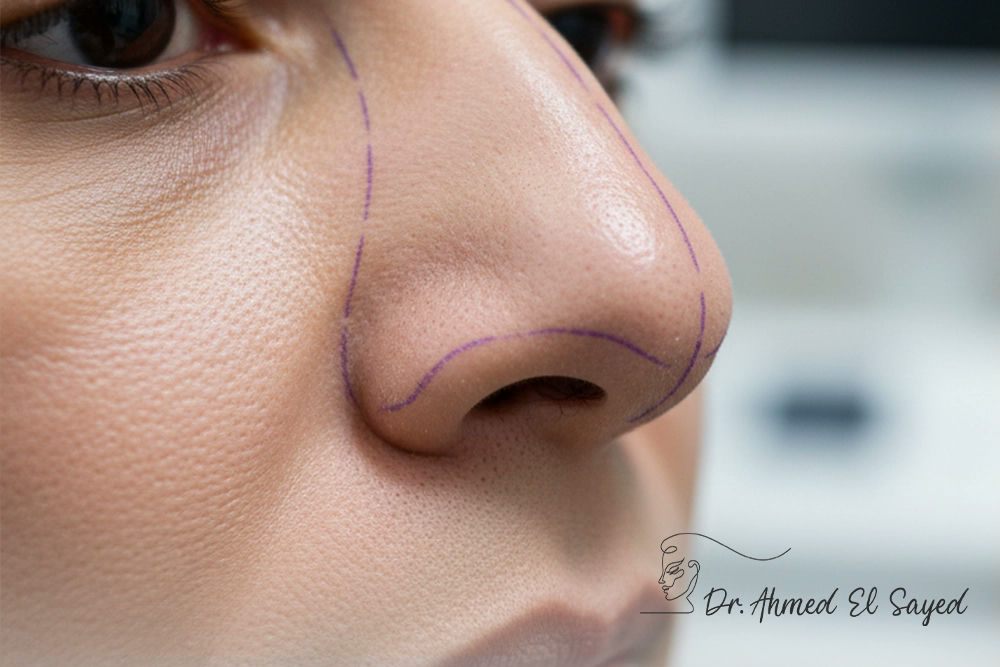
Wide Nose Rhinoplasty
Rhinoplasty is one of the most common cosmetic procedures in Egypt and the Arab world, particularly for patients with a wide nose that affects overall facial harmony and self-confidence. Since the nose is located at the center of the face, even a slight change in its size or width can make a noticeable difference in the overall appearance.
Wide nose rhinoplasty is not just about making the nose smaller. It aims to precisely reshape the nose so that it complements the proportions of the face while preserving normal breathing function.
With advances in modern surgical techniques, rhinoplasty can now provide more precise and natural-looking results, with a faster recovery and enhanced safety when performed by a specialized and experienced surgeon such as Dr. Ahmed El Sayed, considered the best wide nose rhinoplasty doctor in Egypt, with more than 10 years of experience.
This guide outlines everything you need to know about wide nose rhinoplasty, from suitable candidates and surgical techniques to when the results become visible, helping you make an informed and confident decision.
For consultation and booking
Rhinoplasty Overview
Rhinoplasty is one of the most common cosmetic surgeries worldwide because the nose occupies a central position on the face and has a direct impact on facial harmony. Rhinoplasty is not limited to improving appearance; it may also address functional problems such as difficulty breathing or a deviated nasal septum.The reasons for undergoing rhinoplasty vary from person to person. Some patients may want to reduce the size of a large nose, while others may wish to reshape the nasal tip or correct asymmetry between the two sides. One of the common conditions requiring precise and specialized treatment is a wide nose, whether the width is mainly in the upper nasal bones, the nasal base, or the tip.
The success of rhinoplasty depends largely on the surgeon’s experience and precision in achieving a balance between appearance and function while maintaining a natural look and avoiding excessive changes.
What Is Wide Nose Rhinoplasty?
Wide nose rhinoplasty is a surgical procedure designed to reduce the width of the nose and improve its proportions in relation to the facial features. The width may be caused by the upper nasal bones, the nasal base and wide nostrils, the nasal tip, or a combination of these factors.During the procedure, the surgeon reshapes the nasal bones or cartilage or narrows the nasal base, depending on the individual anatomy and degree of widening.
Techniques used to reduce a wide nose may include:
• Narrowing the nasal bones through carefully planned surgical osteotomies.
• Narrowing the nasal base through small, strategically placed incisions.
• Reshaping the cartilage of the nasal tip to reduce its width.
The precise surgical strategy is customized following a detailed clinical assessment of skin thickness, skeletal support, and facial ratios.
Benefits of Wide Nose Rhinoplasty
Wide nose rhinoplasty offers several cosmetic and functional benefits, including:1. Improved Facial Harmony: Reducing the width of the nose can create better balance between the nose and the other facial features, particularly the eyes and lips.
2. A More Defined and Refined Appearance: When the width of the nose is reduced carefully and proportionately, the face can appear more refined and attractive without losing its natural character.
3. The Option to Combine Cosmetic and Functional Treatment: In some cases, breathing problems can be corrected at the same time as reducing the width of the nose, providing both aesthetic and functional benefits.
4. Long-Lasting Results: The results of wide nose rhinoplasty are considered permanent in most cases because the nasal bones and cartilage are surgically reshaped in a stable manner.
5. Increased Self-Confidence: Aesthetic nasal balance provides a positive boost to personal confidence and self-image.
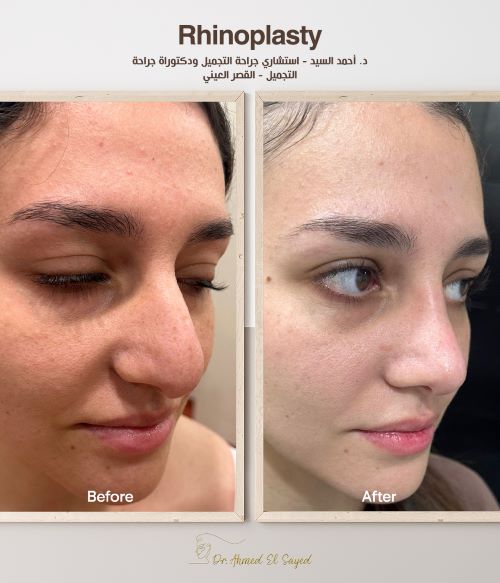
Ideal Candidates for Wide Nose Rhinoplasty
Candidacy is determined through a detailed clinical evaluation. You may be an ideal candidate if you present with:• Noticeably wide nasal bones: When the upper part of the nose is wider than desired and affects overall facial harmony.
• A wide nasal base or wide nostrils: In some cases, the width is primarily caused by a wide nasal base, which can be surgically corrected through carefully placed, discreet incisions.
• A wide or poorly defined nasal tip: The front of the nose may appear wide due to weak or widely positioned cartilage. In such cases, the cartilage can be reshaped to create a more defined appearance.
• Completed nasal growth: Patients should generally be at least 18 years old, ensuring facial bone development is complete.
• Good General Health: Absence of active, uncontrolled systemic illnesses that could interfere with wound healing.
• Realistic Expectations: An understanding that the goal is balanced facial harmony rather than artificial over-reduction.
Can a Wide Nose Be Narrowed Without Surgery?
Many people wonder whether a wide nose can be reduced without surgery. The answer depends on the underlying cause and the individual anatomy.In select cases with minor asymmetries, dermal fillers can be used to improve the overall appearance and balance of the nose by:
• Smoothing minor irregularities or subtle dorsal depressions.
• Camouflaging a specific prominence.
• Improving balance between different areas of the nose.
However, it is important to clarify that fillers:
• Do not actually reduce the width of the nose.
• Do not make the nasal bones smaller.
• Provide temporary results that last for a limited period.
For patients with true structural broadness caused by wide bones or a wide nasal base, surgical rhinoplasty remains the only definitive, permanent solution.
Who Is the Best Wide Nose Rhinoplasty Doctor in Egypt?
Selecting the right surgeon is crucial, as narrowing the nose demands a high level of precision to preserve internal airway patency while delivering a balanced contour. Key criteria to consider include:1. Extensive experience in rhinoplasty.
2. A thorough understanding of nasal anatomy, including the bones and cartilage.
3. The ability to achieve natural-looking results without overcorrection.
4. A verifiable portfolio of successful before-and-after cases.
Dr. Ahmed El Sayed is considered one of the prominent specialists in wide nose rhinoplasty in Egypt, with more than 10 years of experience in advanced and precise plastic surgery. His balanced surgical approach focuses on:
• Carefully planned narrowing of the nasal bones.
• Precise reshaping of the nasal cartilage.
• Preserving normal breathing function.
• Achieving harmonious proportions with the facial features.
This makes him a trusted option for patients seeking safe and natural-looking results from wide nose rhinoplasty.
How Is Wide Nose Rhinoplasty Performed?
1. Anesthesia: The procedure is performed under general anesthesia to ensure the patient’s comfort throughout surgery.2. Precise Surgical Access: The surgery can be performed using one of two approaches:
o Closed Rhinoplasty: The incisions are made inside the nostrils, leaving no visible external scar.
o Open Rhinoplasty: A very small incision is made beneath the nose, between the nostrils. This approach is often used in cases requiring greater precision during reshaping.
3. Reshaping the Nasal Bones and Cartilage: The surgeon narrows the nasal bones when they are excessively wide and reshapes the cartilage to reduce the width of the nasal tip or nostrils. In some cases, carefully planned surgical osteotomies may be performed to precisely adjust the width of the nasal bones.
4. Supporting the Nose: Once the necessary changes have been completed, an external nasal splint is applied to support the new shape during the healing process.
The procedure usually takes approximately 1 to 3 hours, depending on case complexity.
When Do the Results of Wide Nose Rhinoplasty Appear?
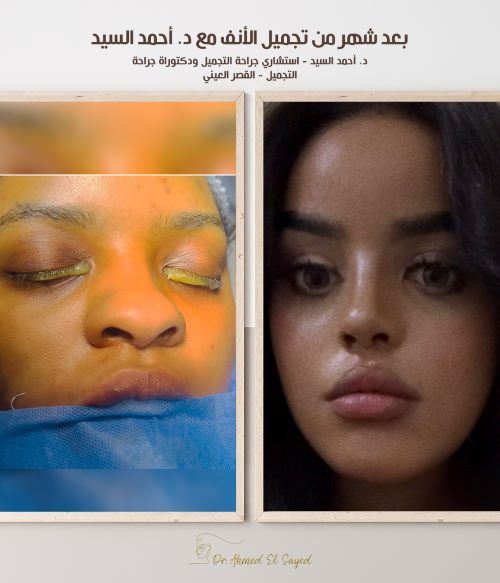
The results of wide nose rhinoplasty develop gradually through several stages:• Week 1: The external splint is removed; new bridge lines are visible, accompanied by initial post-surgical swelling.
• Months 1 to 3: The majority of post-operative swelling subsides, revealing noticeable narrowing and enhanced definition.
• Month 6: The refined contours of the nasal bones become stable and clear.
• Month 12: The final result becomes fully apparent, particularly at the nasal tip.
It is important to understand that swelling around the nasal tip may persist slightly longer than in other areas of the nose. This is normal and usually does not require concern. Following the surgeon’s postoperative instructions plays an important role in supporting recovery and maintaining the final result.
Conclusion
Wide nose rhinoplasty is an important personal decision that requires careful consideration and the selection of an experienced surgeon with the technical and medical expertise needed to achieve natural and harmonious results.Success relies on balancing overall facial aesthetics while fully protecting respiratory function. If you are considering wide nose rhinoplasty, the first step is to schedule a specialized consultation with Dr. Ahmed El Sayed to assess your case accurately, discuss your expectations realistically, and develop an appropriate treatment plan.
With open rhinoplasty, a very small incision is made beneath the nose between the nostrils. When performed precisely by an experienced surgeon, this incision usually heals very well and becomes barely noticeable over time.
Most of the swelling decreases within one to three months, while the final result gradually becomes apparent over 6 to 12 months.
Following the surgeon’s instructions and avoiding trauma or strenuous activity during the first few weeks can help support recovery and protect the result.
The goal is not simply to make the nose smaller, but to maintain a natural appearance that is proportionate to each person’s facial features, ensuring that the final result does not look excessive or artificial.
Patients enjoy an exceptional experience with natural results and comprehensive care in thigh lift procedures with Dr. Ahmed El Sayed.
Laser rhinoplasty is a modern technique that enhances the nasal appearance, particularly when addressing superficial imperfections or improving skin texture.
With over 10 years of experience, Dr. Ahmed El-Sayed is one of Egypt’s foremost plastic and body contouring surgeons.
Modern surgical techniques, such as J-Plasma thigh lift, contribute to providing effective solutions for lifting and sculpting the thighs.