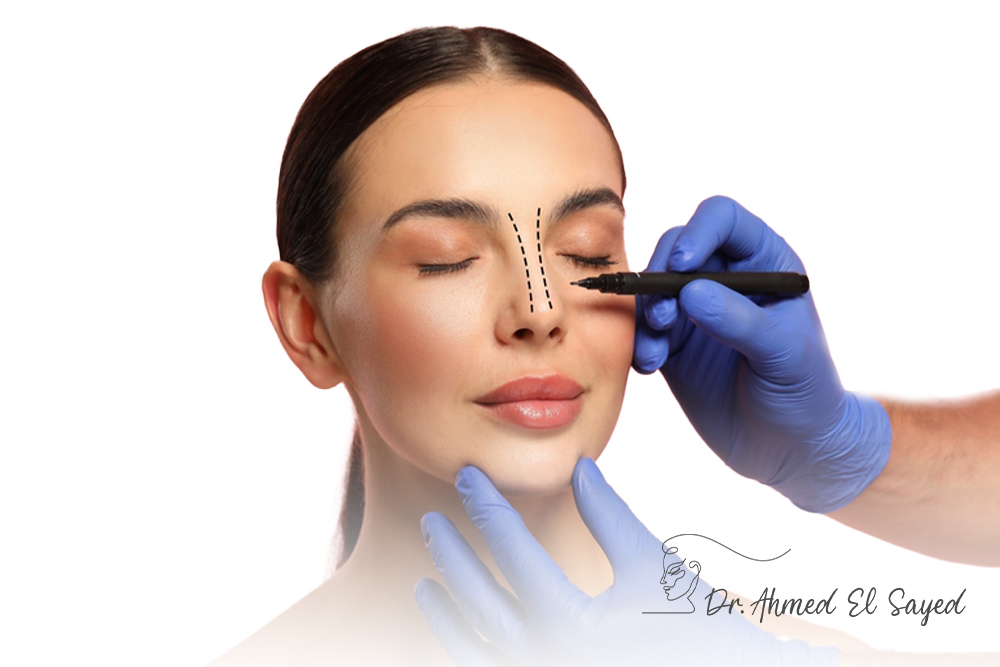
Rhinoplasty
The shape and size of the nose can have a significant impact on how people feel about themselves, from boosting self-confidence to causing self-consciousness. A balanced, harmonious face depends on well-proportioned features, with the nose playing a central role in overall facial aesthetics. Thanks to the expertise of Dr. Ahmed El Sayed, Consultant of Plastic Surgery, PhD in Plastic Surgery, Faculty of Medicine, Kasr Al Ainy, patients can achieve natural-looking, refined results through rhinoplasty without noticeable surgical signs.
For consultation and booking
What is rhinoplasty?
Rhinoplasty is a cosmetic surgical procedure designed to reshape or resize the nose. Some people choose rhinoplasty for aesthetic reasons to enhance the appearance of their nose and create better facial harmony, while others undergo functional or reconstructive rhinoplasty to improve breathing and restore normal nasal function. The procedure may involve reshaping the nasal bones, cartilage, and skin to achieve the desired result.
Why do some people need rhinoplasty?
1. Cosmetic reasons: Many people choose rhinoplasty to enhance their facial appearance and achieve features that better match their personal aesthetic goals. Rhinoplasty can improve overall facial balance by addressing concerns such as:
- A nose that appears too large or disproportionate to the rest of the face.
- A crooked nose or a nasal bridge with an "S-shaped" deviation.
- Visible bumps, depressions, or irregularities along the nasal bridge.
- A wide, poorly defined, or bulbous nasal tip.
- Large or wide nostrils.
- Asymmetrical nasal passages.
2. Medical and functional reasons: In some cases, rhinoplasty is performed for medical purposes rather than cosmetic enhancement. Functional rhinoplasty helps restore both the appearance and function of the nose. Common medical indications include:
- Correcting congenital nasal deformities.
- Treating a deviated nasal septum, one of the most common causes of nasal obstruction and breathing difficulties. Reshaping the internal nasal structure can significantly improve airflow and breathing.
- Repairing deformities caused by trauma, accidents, burns, or nasal fractures. Rhinoplasty helps restore the natural shape of the nose while improving facial symmetry.
- Correcting complications from a previous unsuccessful rhinoplasty. Revision rhinoplasty is performed to address unsatisfactory results from an earlier procedure, improving both the appearance and function of the nose while helping patients regain confidence.
What Are the Different Surgical Approaches to Rhinoplasty?
Rhinoplasty is a highly individualized procedure. The surgical technique Dr. Ahmed El Sayed chooses depends on each patient's unique nasal anatomy, facial proportions, and aesthetic or functional goals. While every treatment plan is tailored to the individual, rhinoplasty is generally performed using one of the following surgical approaches.
Open Rhinoplasty:
- During an open rhinoplasty, a small incision is made across the columella, the strip of tissue between the nostrils. This allows the nasal skin to be gently lifted, giving the surgeon a clear, direct view of the underlying bone and cartilage.
- This approach provides maximum access to the nasal framework, making it ideal for patients who require more complex or extensive reshaping. It allows for greater precision in correcting structural issues and achieving refined, predictable results. Although the procedure involves an external incision, the resulting scar is typically well concealed within the natural contours of the nose and becomes barely noticeable over time. Achieving this requires exceptional surgical expertise to ensure that the scars are inconspicuous and well hidden, which is what distinguishes Dr. Ahmed Elsayed.
Closed Preservation Rhinoplasty:
- In closed rhinoplasty, all incisions are made inside the nostrils, leaving no visible external scars. This technique is commonly recommended for patients who require more conservative refinements, such as reshaping the nasal tip, reducing the overall size of the nose, or smoothing a dorsal hump.
- Preservation rhinoplasty focuses on maintaining as much of the nose's natural bone and cartilage structure as possible while making precise modifications. Because the procedure is performed through limited internal incisions, the surgeon works with a more restricted view of the nasal anatomy, making extensive experience and technical skill essential. Dr. Ahmed El Sayed's expertise ensures that these procedures are performed with the highest level of precision.
- One of the main advantages of closed preservation rhinoplasty is the absence of visible scarring. It also offers faster recovery, less tissue disruption, and natural-looking results while preserving much of the nose's original anatomy. However, this approach may not be suitable for patients who require more extensive structural reconstruction.
Dr. Ahmed El Sayed utilizes the latest advanced rhinoplasty techniques while carefully tailoring every procedure to the individual needs of each patient. Since every nose and every aesthetic goal is unique, the surgical approach is selected on a case-by-case basis to achieve the most natural, balanced, and satisfying result.
Possible Risks and Complications of Rhinoplasty:
Like any surgical procedure, rhinoplasty carries certain potential risks and complications. These may include:
- Septal perforation (a hole in the nasal septum).
- Infection.
- Nosebleeds.
- Temporary or permanent changes in the sense of smell.
- Pain or discomfort.
Although these risks exist, they can be significantly minimized when the procedure is performed by an experienced plastic surgeon. Thanks to Dr. Ahmed El Sayed's extensive expertise and precise surgical technique, patients can achieve a naturally balanced and aesthetically pleasing nose while reducing the likelihood of complications. Equally important, he carefully preserves the functional integrity of the nose to ensure that breathing is not compromised, delivering results that enhance both appearance and nasal function.
Recovery After Rhinoplasty:
- Following surgery, a nasal splint is placed over the nose to protect and support its new shape during the initial healing period.
- Soft nasal packing may also be placed inside the nostrils. Although this can cause temporary discomfort, it is typically removed within the first week after surgery.
- During recovery, patients should avoid hard physical activities, swimming, and prolonged sun exposure to promote proper healing and achieve the best possible outcome.
When Will I See the Results of Rhinoplasty?
The first noticeable improvement in the appearance of the nose becomes visible once the splint is removed, usually about one week after surgery. However, the final shape of the nose continues to refine gradually, and complete healing may take up to one year.
Some facial swelling is expected during the healing process and will steadily subside over time. Patients who undergo functional rhinoplasty to correct a deviated septum often notice an improvement in breathing within a few weeks. Recovery time and the rate at which results become apparent can vary from one patient to another.
Conclusion:
Rhinoplasty is a transformative procedure that enhances both the appearance and function of the nose. Thanks to continuous advances in surgical techniques and technology, patients can now achieve more natural-looking results while improving nasal breathing and function.
If you are considering rhinoplasty, choosing an experienced and qualified plastic surgeon is essential. Dr. Ahmed El Sayed, Consultant of Plastic Surgery and PhD in Plastic Surgery, Faculty of Medicine, Kasr Al Ainy, provides personalized treatment plans and comprehensive care tailored to each patient's unique needs, from the initial consultation through recovery.
Book your consultation today and take the first step toward achieving natural, harmonious results with confidence.
.jpg)
This content has been medically reviewed and approved by Dr. Ahmed Elsayed, Consultant Plastic Surgeon.
Customer rating on Google: 5.0
The best plastic surgeon in Egypt
تكبير المؤخرة بحقن الدهون يحقق نتيجة مزدوجة: شفط الدهون من مناطق الجسم الزائدة، ثم إعادة حقنها لزيادة حجم المؤخرة.
يُستخدم السيليكون لتحسين حجم وشكل المؤخرة، حيث تهدف هذه الجراحة إلى منح المؤخرة مظهرًا أكثر امتلاءً، استدارةً، وتحديدًا.
يُمكن الحصول على ذراعين جميلتين منحوتتين بتقنية شفط دهون الذراعين بالفيزر لنحت الذراعين الأنثوية والرياضية.