Thick-Skinned Rhinoplasty
Thick-Skinned Rhinoplasty
Many individuals seek effective solutions to refine a wide or poorly defined nose, particularly cases characterized by thick skin and a bulbous nasal tip. Thick-skinned rhinoplasty stands out as one of the most delicate and specialized procedures in facial plastic surgery. Choosing a surgeon with verifiable expertise in handling thick-skinned nasal structures is crucial, as this anatomical profile requires entirely different surgical techniques compared to bony or thin-skinned noses.
When searching for the best surgeon for thick-skinned rhinoplasty in Egypt, Dr. Ahmed El Sayed is widely regarded as a leading surgeon, bringing more than 10 years of specialized experience in advanced cosmetic and reconstructive nasal surgery. His surgical approach focuses on strengthening the nasal cartilage and achieving natural, well-balanced results without over-reduction, fully preserving internal respiratory function.
This comprehensive guide details the characteristics of thick-skinned noses, surgical indications, operative approaches, expected before-and-after results, and recovery timelines to help you make an informed decision.
For consultation and booking
What Is a Thick-Skinned (Bulbous) Nose?
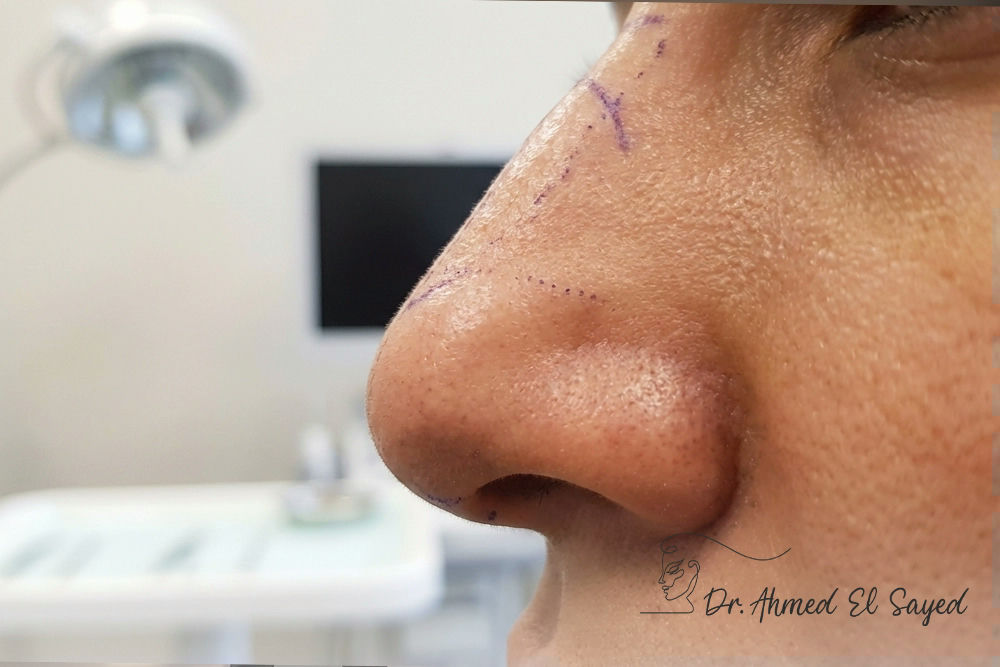
A thick-skinned nose is anatomically characterized by a dense skin envelope, particularly at the nasal tip, overlying a relatively weaker or less defined cartilaginous framework. Patients typically present with a wide, more rounded, or amorphous nasal tip where the contours of underlying cartilage are obscured.Thick-skinned nasal structures require specialized surgical handling because the heavy skin envelope can mask structural definition and prolong post-operative swelling, making surgical experience a decisive factor in long-term success.
Key anatomical characteristics include:
• A thick skin envelope, concentrated predominantly over the nasal tip.
• A broad, rounded, or ill-defined nasal tip.
• Relatively weak cartilage.
• Prominent subcutaneous fatty tissue beneath the tip skin.
Because of these factors, thick-skinned rhinoplasty differs from standard rhinoplasty. The surgeon focuses more on reshaping and strengthening the cartilage rather than relying primarily on reducing the nasal bones.
Reasons to Undergo Thick-Skinned Rhinoplasty
1. Reducing the size of the nasal tip: A large or rounded nasal tip is one of the most common concerns. Patients often seek a more defined appearance that is better proportioned with the rest of the face.2. Improving facial balance: The nose is a central feature of the face, and excessive nasal width or volume can affect overall facial harmony. Rhinoplasty can help create a more balanced appearance.
3. Treating breathing problems: In some cases, a thick-skinned nose may be associated with functional problems such as a deviated nasal septum. Surgery can then combine cosmetic reshaping with correction of the breathing problem.
4. Correcting the result of a previous procedure: Some patients may require revision thick-skinned rhinoplasty if a previous procedure did not achieve the desired cosmetic or functional result.
Approaches to Thick-Skinned Rhinoplasty
Techniques vary depending on dermal thickness, cartilage strength, and aesthetic objectives. Treatment can generally be divided into two main approaches:• Surgical Rhinoplasty: Surgery is considered the most effective and long-lasting solution for thick-skinned nose, particularly when there is:
o Weak cartilage that requires additional support.
o A noticeably wide nasal tip.
o A desire for a permanent and clearly defined change.
The procedure may involve:
o Reshaping the cartilage of the nasal tip.
o Strengthening the cartilage with cartilage grafts when necessary.
o Reducing excess fatty tissue beneath the skin in selected cases.
o Creating a balance between reducing the size of the nose and maintaining normal breathing function.
This procedure requires considerable surgical expertise, as excessive removal or weakening of the cartilage may compromise the nasal structure over time.
• Non-Surgical Rhinoplasty (Dermal Fillers): In selected minor cases, hyaluronic acid fillers can provide temporary camouflage for minor asymmetries or dorsal irregularities. However, fillers cannot reduce nasal volume, cannot thin skin, and offer only temporary modification. Surgery remains the gold standard for moderate to severe cases, to achieve a noticeable and long-lasting result.
The Best Doctor for Thick-Skinned Rhinoplasty in Egypt
Selecting the right surgeon requires assessing their clinical skill with complex, thick-skinned nasal frameworks. A thick-skinned nose is technically different from a bony nose and requires particular expertise in reshaping and strengthening the nasal cartilage.Important factors when choosing a surgeon include:
• Years of experience in advanced rhinoplasty procedures.
• The number of similar cases successfully treated.
• The ability to achieve natural-looking results that suit the patient’s facial features.
• A thorough understanding of nasal anatomy and thick skin characteristics.
Dr. Ahmed El Sayed is considered one of the prominent names in thick-skinned rhinoplasty in Egypt, with more than 10 years of experience in advanced plastic surgery. His precise surgical approach focuses on:
• Strengthening the cartilage of the nasal tip rather than over-resecting cartilage.
• Achieving balanced reduction without compromising breathing.
• Preserving the patient’s facial identity and avoiding excessive changes.
This makes him a trusted option for patients seeking a natural and safe result from thick-skinned rhinoplasty.
Who Is an Ideal Candidate for Thick-Skinned Rhinoplasty?
Candidacy is determined through a detailed clinical evaluation. Ideal candidates typically meet the following criteria:• Visible Tip Broadness: Individuals with broad, rounded nasal tips that disrupt facial harmony.
• Realistic Expectations: Understanding that thick skin has biological boundaries; the goal is substantial refinement and structural balance rather than an artificially tiny nose or excessive change.
• Good General Health: Absence of uncontrolled medical conditions that could impair tissue healing.
• Complete Skeletal Maturity: Candidates must have completed nasal skeletal growth, typically at or after 18 years of age.
A detailed preoperative assessment helps establish an appropriate surgical plan and supports the best possible outcome.
Steps of Thick-Skinned Rhinoplasty
Thick-skinned rhinoplasty involves several key stages to achieve a precise and balanced result:1. Clinical Assessment & Anatomical Planning: Dr. Ahmed El Sayed evaluates the shape of the nose, skin thickness, and cartilage strength, while precisely identifying the required changes, whether these involve reducing the nasal tip, strengthening it, or correcting an internal deviation.
2. Anesthesia: The procedure is performed under general anesthesia to ensure the patient’s comfort throughout the surgery.
3. Cartilage Reshaping: In thick-skinned rhinoplasty, Dr. Ahmed El Sayed focuses on:
o Strengthening the tip cartilage.
o Reshaping it to create greater definition.
o Using cartilage grafts when necessary to maintain structural support and the surgical result.
4. Reducing Excess Tissue: Excess fatty tissue beneath the skin may be carefully addressed in selected cases to improve definition of the nasal tip while preserving the health and integrity of the skin.
5. Supporting the Nose After Surgery: An external nasal splint is applied to support the new shape during the first few days of recovery. This precise stage can make a significant difference in the quality of the final result, especially in thick-skinned noses where an appropriate balance between reduction and structural support is essential.
Results of Thick-Skinned Rhinoplasty
Pre- and post-operative transformations are among the main concerns for patients considering thick-skinned rhinoplasty, particularly because thick skin can significantly influence the way the final result becomes visible.What Does the Nose Look Like Before Surgery?
• A wide or rounded nasal tip.
• Poor cartilage definition.
• In some cases, mild prominence or asymmetry.
What Can Be Expected After Surgery?
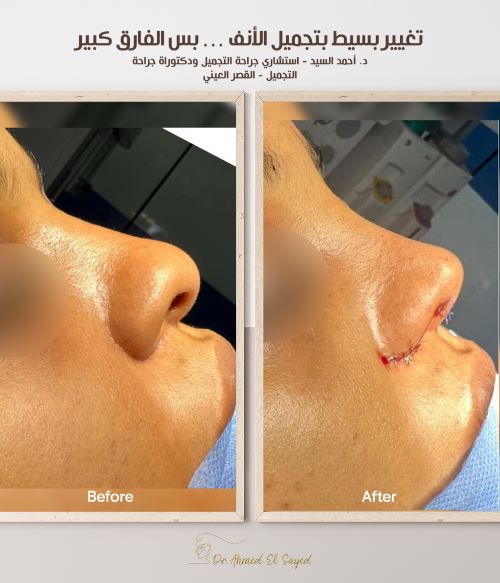
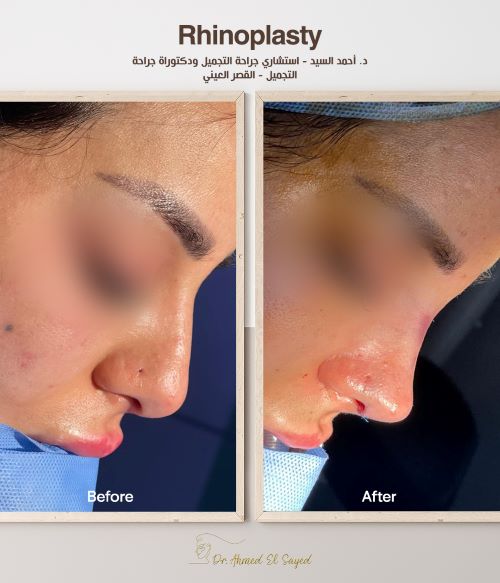
• A more defined and proportionate nasal tip.
• Balanced reduction without excessive narrowing.
• Improved harmony between the nose and the rest of the facial features.
• Preservation of normal breathing function.
Because thick skin retains edema longer than thin skin, definitive results require patience. Initial improvements appear within 3 to 6 months, while final results typically need over 9 to 12 months. The main goal is not to make the nose excessively small, but rather to achieve a natural, balanced appearance that maintains the individual character of the face.
Potential Risks and Considerations of Thick-Skinned Rhinoplasty
When performed by a specialized plastic surgeon, thick-skinned rhinoplasty carries a high safety profile. Potential considerations specific to this anatomy include:• Prolonged post-operative edema due to thick subcutaneous tissue.
• Minor transient asymmetry during the early healing phases.
• Slower progression toward the final aesthetic profile.
• Temporary nasal stuffiness during the initial recovery weeks.
The likelihood of these complications can be significantly reduced through:
• Thorough assessment before surgery.
• Choosing a surgeon experienced in thick-skinned rhinoplasty.
• Following all postoperative instructions carefully.
Surgical experience therefore plays a major role in minimizing risks and achieving a stable and safe outcome.
Cost of Thick-Skinned Rhinoplasty
The cost of thick-skinned rhinoplasty varies based on:• The surgeon’s experience and professional reputation.
• The complexity of the individual case.
• Whether it is a primary procedure or a revision rhinoplasty.
• The standard of the hospital or surgical facility.
• Preoperative examinations and postoperative follow-up.
For this reason, there is no single fixed price that applies to every patient, as each thick-skinned nose requires an individual assessment and a customized surgical plan.
However, the choice of surgeon should not be based on price alone. Experience, surgical skill, safety, and the quality of the expected result should remain the primary considerations.
Conclusion
Thick-skinned rhinoplasty requires advanced surgical expertise and a thorough understanding of the characteristics of thick skin and nasal cartilage. The goal is not simply to make the nose smaller, but to achieve a balanced result that maintains facial harmony and normal breathing function.Choosing the right surgeon is one of the most important factors in the success of the procedure, particularly because thick-skinned noses require specialized techniques and carefully planned structural support.
With more than 10 years of experience in plastic surgery, Dr. Ahmed El Sayed provides a high level of surgical precision and safety, with a focus on natural-looking results based on careful planning and execution.
If you are considering thick-skinned nose rhinoplasty, a specialized consultation is the first step toward achieving a safe and satisfying result that can last for many years.
In these cases, reduction is achieved mainly by reshaping and strengthening the cartilage rather than removing large amounts of it. Thick skin requires adequate structural support for the new shape to become clearly visible.
The aim is therefore to improve definition and balance rather than excessively reduce the size of the nose.
However, because thick-skinned noses have thicker skin, swelling may take longer to resolve completely. The result usually becomes noticeably clearer within 3 to 6 months, while the final appearance may take approximately 9 to 12 months to fully settle.
In rare cases, however, a minor secondary procedure may be required if an unexpected change occurs or if the desired result is not fully achieved.
Thigh liposuction and lifting procedures offer effective and radical solutions to problems of fat accumulation and sagging skin in the thigh area.
The BBL in Egypt is an ideal choice for every woman seeking a harmonious body and a naturally feminine appearance using her own body fat.
Wide nose rhinoplasty is not just about reducing nasal size; rather, it aims to precisely reshape it to harmonize with facial proportions.
Combining liposuction with other body sculpting treatments enhances results and achieves a more harmonious appearance, ensuring a perfect body.