Tummy Tuck
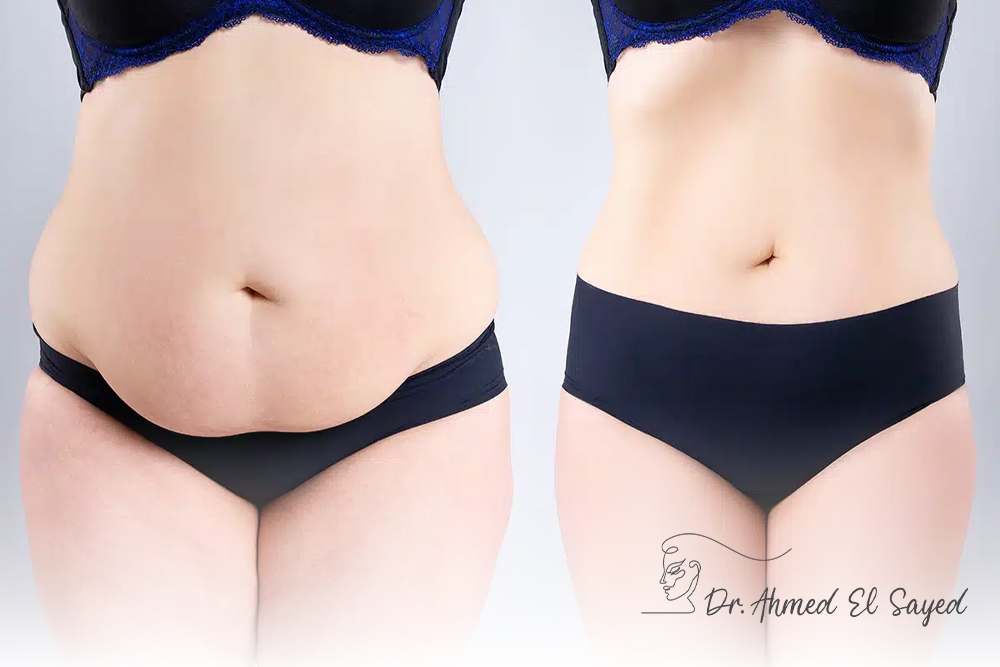
Tummy Tuck
Tummy tuck surgery offers an effective solution for people with significant abdominal skin laxity that cannot be corrected through exercise alone. With the expertise and skill of Dr. Ahmed El Sayed, Consultant Plastic Surgeon, patients can achieve natural-looking results and a a perfectly toned, flat abdomen.
For consultation and booking
Introduction to Tummy Tuck Surgery
Tummy tuck surgery, also known as abdominoplasty, is a surgical procedure designed to remove excess, sagging skin from the abdominal area. It may involve tightening the abdominal muscles, removing excess skin, and liposuction. The procedure creates a flatter abdomen and addresses skin laxity caused by aging, previous surgery such as a C-section, pregnancy, or significant weight loss.What Is the Difference Between a Tummy Tuck and Liposuction?
• Both procedures enhance the appearance of the abdomen and create a more contoured look, but their goals and techniques differ A tummy tuck primarily focuses on removing loose, inelastic skin and repairing separated abdominal muscles, with the option to include liposuction. In contrast, liposuction targets localized fat deposits in patients with good skin elasticity and minimal sagging.• Liposuction is performed through tiny incisions using specialized cannulas with VASER or J-Plasma technology to break down and extract fat safely without damaging surrounding tissue. A tummy tuck requires a larger incision (positioned based on the chosen technique) to tighten the abdominal wall muscles and excise excess skin.
What Are the Types of Tummy Tuck Procedures?
Tummy tuck techniques vary based on individual goals, body type, and the extent of skin laxity:• Traditional (Full) Tummy Tuck: The incision extends across the lower abdomen from hip bone to hip bone. The surgeon tightens the abdominal muscles, removes loose skin, and repositions the navel (belly button). Temporary surgical drains may be placed for a few days to remove excess fluid.
• Mini Tummy Tuck: Ideal for patients with localized fat and mild skin laxity confined to the lower abdomen (below the navel). The navel remains in place, and the incision is significantly smaller than that of a full tummy tuck.
• Extended Tummy Tuck: Similar to a full tummy tuck, but the horizontal incision extends around the hips to the lower back. This technique addresses severe sagging in both the upper and lower abdomen, flanks, and lower back for complete circumferential contouring.
• Fleur-de-Lis Tummy Tuck: It is similar to an extended tummy tuck but involves both a horizontal incision and a vertical midline incision, forming an inverted "T" or fleur-de-lis.
Who Is the Ideal Candidate for a Tummy Tuck?
A tummy tuck is suitable for individuals in good general health who wish to eliminate severe abdominal laxity. Ideal candidates include:• Individuals seeking a firmer, flatter abdomen to improve body proportions and boost self-confidence.
• Women who have finished childbearing and want to tighten separated abdominal muscles and remove loose skin.
• Individuals who have lost a significant amount of weight (especially post-bariatric surgery) resulting in hanging skin folds.
• Individuals with reduced skin elasticity, persistent sagging, and localized fat deposits.
This surgery is NOT suitable for:
• Individuals planning further weight loss (weight should be stable before undergoing surgery).
• Individuals with unmanaged chronic health conditions (such as uncontrolled diabetes or cardiovascular disease).
• Individuals with severe obesity (a tummy tuck is a body contouring procedure, not a weight-loss method).
Steps of a Tummy Tuck Procedure
The procedure is performed under general anesthesia and typically takes between 2 to 4 hours, depending on individual anatomy and the type of surgery. The incision is made along the lower abdomen between the navel and pubic area. Dr. Ahmed El Sayed tightens the abdominal wall muscles, removes excess fat, and excises loose skin. The remaining skin is precisely sutured to ensure a smooth, natural abdominal contour.Risks and Potential Side Effects of a Tummy Tuck
A tummy tuck is a safe and effective procedure. However, like any major surgery, potential risks may include:• Infection.
• Bleeding.
• Swelling.
• Bruising.
• Fluid accumulation.
• Changes in skin color.
• Poor wound healing.
• Tissue necrosis.
• Blood clots.
Although these complications are possible, careful patient selection, proper surgical technique, and appropriate postoperative care can help minimize the risks.
Expected Results After a Tummy Tuck with Dr. Ahmed El Sayed
Initial improvements in abdominal shape and volume are noticeable immediately after surgery. Post-operative swelling and bruising are normal and gradually subside over the recovery period. Final, refined results typically emerge within 3 to 6 months post-surgery, delivering a naturally contoured, firm, and flat abdomen.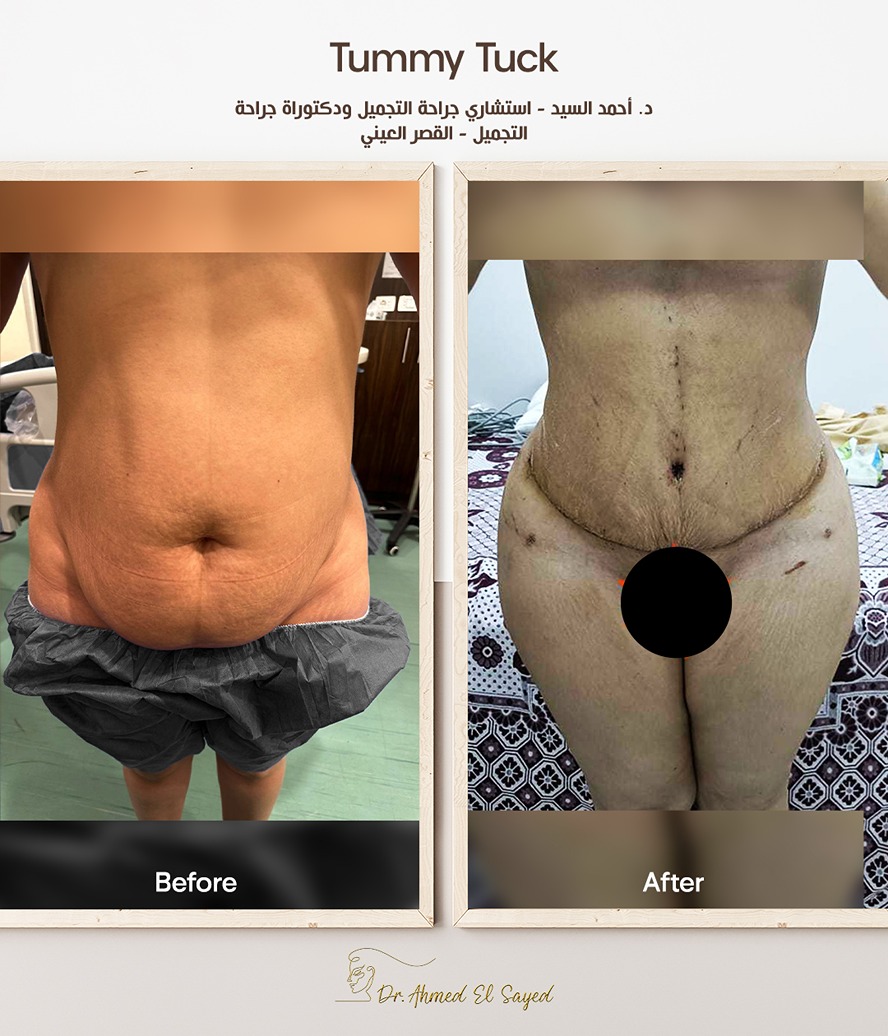
Your weekly guide to a quick and effective recovery after breast augmentation using silicone implants, to ensure impressive results that enhance your beauty.
Rhinoplasty requires advanced skill and facial balance. Choosing the right surgeon is key to safe, natural, and lasting results.
A non-surgical tummy tuck is the ideal solution for those seeking natural and safe results without the need for anesthesia or long recovery periods.
Abdominal sculpting is an ideal solution for individuals looking to eliminate stubborn localized fat and achieve a toned, well-proportioned physique.